Thursday, March 31, 2022

INDONESIA – INDONÉSIE Gamelan of Jogja Kraton – Gamelan of Java – Seven Seas – Ethnic Music of the World Series – GXC 5014

INDONESIA – INDONÉSIE
Gamelan of Jogja Kraton – Gamelan of Java – Seven Seas – Ethnic Music of the World Series – GXC 5014, recorded by Fumio Koizumi in 1972 (LP)
#Indonesia #Indonésie #Java #gamelan # Sultan’s Palace #Kraton #Jogjakarta #Yogyakarta #sultan #rebab #suling flute #world music #traditional music #musique traditionnelle #dance #ceremonies #theatre #rare gamelan #dance #shadow #vinyl #Koizumi Fumio #Seven Seas #Ethnic Music of the World Series

Following our Music from Iran post here, I now present another stupendous recording by musicologist Fumio Koizumi on the Seven Seas label’s essential Ethnic Music of the World Series. This 1972 performance at the Sultan’s Palace of Yogyakarta – featuring the Royal Gamelan ensemble’s enthralling interwoven clusters, eerie voices and chorus, clapping, a whimsical suling flute and a stark, abstract bowed rebab violin – creates a delicate, fluid, seemingly suspended and otherworldly multi-layered tapestry of sound.


Suite à notre post Music from Iran ici, je vous présente un autre magnifique enregistrement réalisé par le musicologue Fumio Koizumi sur l'incontournable Ethnic Music of the World Series du label japonais Seven Seas. Ce concert de 1972 de l’ensemble royal au palais du sultan de Yogyakarta – fait de sonorités profondes de gamelans entremêlés, de voix évanescentes, de battements de mains, d’une flûte suling à quatres trous et d’un violon à archet rebab abstrait – forment une tapisserie sonore complexe, délicate, fluide, et éthérée qui reste comme suspendue dans l’espace.


Download:
MP3 


Koizumi Fumio (1927-1983) was a major Japanese ethnomusicologist who studied aesthetics at Tokyo University and Japanese music with Eishi Kikkawa. He taught at Tokyo Geijutsu Daigaku (Tokyo National University of Fine Arts and Music) and at Wesleyan University in the United-States and recorded many disappearing musical traditions during his numerous field trips across the world. His years of work culminated with the 1981 release of the 50-LP Great Anthology of Traditional Music.

Our other Javanese gamelan posts:

Gamelan Garland – Gamelan Kjai Kanjut Mesem/Mangkunagaran Surakarta (1968) here

Gamelan Kjahi Kaduk, Manis Rengga – Gamelan Music from Java (1963) here

Musique de Java – L'Ecole de Loka Wangi (1971) here

Java – Glagah Wangi Gamelan – Une Nuit de Wayang Kulit (1971) here

Java – Gamelans from the Sultan's Palace in Jogjakarta – Archiv Produktion here

Sunda – Gamelan Degung directed by Enip Sukanda (1972) here


Vintage postcard of Wajang Wayand Orang dancers, Yogyakarta Djokja, Java, c.1910s:


MusicRepublic INDONESIA – INDONÉSIE Gamelan of Jogja Kraton – Gamelan of Java – Seven Seas – Ethnic Music of the World Series – GXC 5014

Vintage postcard of masked Wajang Wayand Orang dancer, Java, c.1930s:


MusicRepublic INDONESIA – INDONÉSIE Gamelan of Jogja Kraton – Gamelan of Java – Seven Seas – Ethnic Music of the World Series – GXC 5014


Please help me purchase important traditional records to pursue my global 

curation project and share the best finds with you on this blog:


Sunday, March 20, 2022

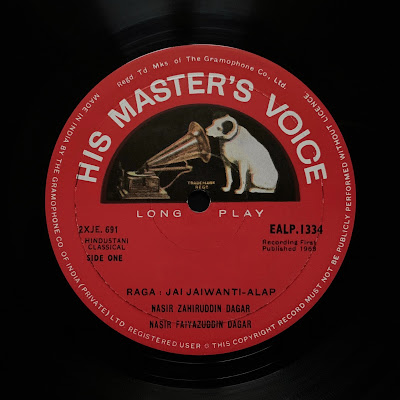
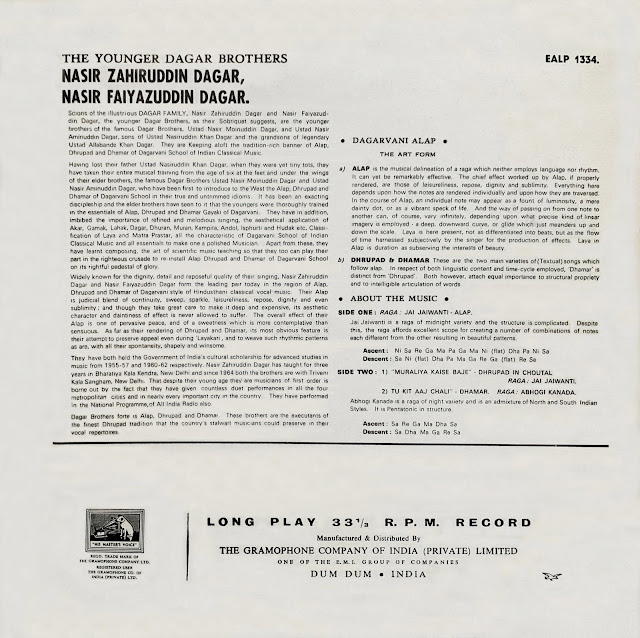
INDIA – INDE Dagar Brothers – Nassir Zahiruddin Dagar & Nassir Faiyazuddin Dagar – His Master’s Voice – EALP 1334

INDIA – INDE

Dagar Brothers – Nassir Zahiruddin Dagar & Nassir Faiyazuddin Dagar – His Master’s Voice – EALP 1334, released 1968 (LP)

#Dhrupad #India #Inde #Dagarvani #Hindustani # Nasir Zahiruddin Dagar #Nasir Faiyazuddin Dagar #Nasir Aminuddin Dagar #Nasir Moinuddin Dagar #vocal #meditation #drone #tanbura # pakhawaj # jugalbandi #Indian music #vinyl #meditative #traditional music #world music #devotional #Indian music #Senior Dagar Brothers #Younger #vintage

Born in Indore, Madhya Pradesh, the Younger Dagar Brothers, Nasir Zahiruddin (1933–1994) and Nasir Faiyazuddin (1934–1989), were two great classical Dagarvani Dhrupad singers from the highly prestigious Dagar family, whose unbroken musical lineage went back 19 generations.


The two younger brothers were still infants when the training of their two older brothers, vocalists Nasir Moinuddin Dagar (1921-1966) and Nasir Aminuddin Dagar (1923-2000)—the Senior Dagar Brothers—was interrupted by the untimely death of their father Nasiruddin Khan (1895-1936) in 1936. 


The two elder brothers continued their musical education under Riyazuddin Khan (1885-1947) and Ziauddin Khan Dagar (1886-1946), and formed a formidable jugalbandi duo, whose fame in the 1950s and 60s helped revive the Dhrupad tradition. The senior brothers also trained their younger siblings, whose sublime first album from 1968 I am delighted to showcase here. Following Moinuddin Dagar’s death in 1966 at the age of 46, the two younger brothers were the last Dagar jugalbandi vocalists and Aminuddin Dagar pursued a solo career.

The two younger brothers’ deep, serene and telepathic singing carried by the tanpura’s drone, and Bithal Das Gujrati’s delicate pakhawaj double-sided drum on Side B, weave timeless, sensuous sonorities connected with the chanting of ancient Vedic hymns and mantras. These universal vibrations are pure bliss, “a true miracle,” according to our friend João.


Nés à Indore, dans le Madhya Pradesh, les Younger Dagar Brothers, Nasir Zahiruddin (1933–1994) et Nasir Faiyazuddin (1934–1989), étaient deux grands chanteurs classiques du Dhrupad Dagarvani de la prestigieuse famille Dagar, dont la lignée musicale ininterrompue remontait à 19 générations.


Les deux jeunes frères étaient encore en bas âge lorsque la formation de leurs deux frères aînés, les chanteurs Nasir Moinuddin Dagar (1921-1966) et Nasir Aminuddin Dagar (1923-2000) – les Senior Dagar Brothers – fut interrompue par la mort prématurée de leur père Nasiruddin Khan (1895-1936) en 1936.


Les deux frères aînés poursuivirent leur éducation musicale sous la tutelle de Riyazuddin Khan (1885-1947) et de Ziauddin Khan Dagar (1886-1946), et formèrent un duo jugalbandi, dont la renommée dans les années 50 et 60 contribua à faire revivre la tradition Dhrupad. Les frères aînés ont également assuré l’apprentissage musical de leurs jeunes frères, dont je suis ravi de présenter ici leur sublime premier album publié en 1968. Après la mort de Moinuddin Dagar en 1966 à l'âge de 46 ans, les deux jeunes frères furent les derniers chanteurs Dagar jugalbandi, alors que l’ainé Aminuddin Dagar poursuvit une carrière solo.


Le chant profond, serein et télépathique des deux frères cadets, porté par le bourdon du tanpura, et le délicat tambour double face pakhawaj de Bithal Das Gujrati sur la face B, tissent des sonorités intemporelles et sensuelles liées au chant d'anciens hymnes et mantras védiques. Ces vibrations universelles sont pures félicités, « un véritable miracle », selon notre ami João.


***


“The sound of the tanbura (drone) moves your entire being: your body outside and your heart within you. It acts upon you. And when it moves you, what you sing is not simply something you have memorized, it is music that comes from your soul. The emotions of the soul are transformed into music… The tanbura sets the whole atmosphere for the raag…once we hold the instrument we tune our heart to it from within. It’s the tanbura that tells us which raag we should sing… That’s why we can never tell beforehand what we’re going to sing,” said Nasir Zahiruddin Dagar in the superb 1993 documentary Dagarvani directed by Renuka George.


Download:

Our other Dhrupad music posts:

Nasir Aminuddin Dagar – HMV EASD 1420 here

Zia Mohiuddin Dagar – Morgonraga – here

Zia Mohiuddin Dagar – HMV - 7 EPE 1312 here

Chandrashekhar Naringrekar – HMV - 7 EPE 1590 here


The photograph below is from Gloire des Princes, Louange des Dieux - catalogue for the March-June 2003 Musée de la Musique exhibition, Paris:

Prince and musician, by Hunhar, Mughal, c.1650-1660:


MusicRepublic INDIA Dagar Brothers – Nassir Zahiruddin Dagar & Nassir Faiyazuddin Dagar – His Master’s Voice – EALP 1334

Please help me purchase important traditional records to pursue my global 

curation project and share the best finds with you on this blog:


Sunday, March 6, 2022

CAMEROON – CAMEROUN Musiques du Cameroun – Ocora – OCR 25 – Bakweri / Bamilike / Bamoun / Beti

CAMEROON – CAMEROUN

Musiques du Cameroun – Ocora – OCR 25 – Bakweri / Bamileke / Bamoun / Beti, recorded by Tolia Nikiprowetzky in 1965 (LP)
#Cameroon #Cameroun # Bamileke #Bamoun #Bamun #Bakweri #Beti #traditional music #world music #African music #musique africaine #musique traditionnelle #ritual #ceremony #spirit world #ancestors #MusicRepublic #vinyl #polyphony #chorus #rattles #drums #mvet harp #trance #transe #dance #MusicRepublic #Ethnic #Ocora #Tolia Nikiprowetzky

This classic LP of music from Cameroon from the legendary first Ocora series offers a glimpse into the authentic traditional music of a bygone era from the Bamileke, Bamum, Beti, and Bakweri people recorded by the Russian-born French composer and musicologist Tolia Nikiprowetzky (1916-1997). 


These collective musics and dances, originating from these complex, well-defined traditional cultures—which maintained a close connection with the realms of the ancestors and spirits via rituals, ceremonies and symbolic language—played a central role in traditional communal and religious life. A way of life far removed from the values of our modern individualistic societies.


Cet album de musiques du Cameroun de la légendaire première série Ocora offre un aperçu de la musique traditionnelle authentique d’antan des Bamiléké, des Bamoun, des Beti et des Bakweri enregistrée par le compositeur et musicologue français d'origine russe Tolia Nikiprowetzky (1916-1997).


Les musiques et danses collectives issues de ces cultures traditionnelles complexes et bien définies – qui entretenaient des liens étroits avec le monde des ancêtres et des esprits par le biais de rituels, de cérémonies et de langage symbolique – jouaient un rôle central dans la vie communautaire et religieuse. Un mode de vie bien éloigné des valeurs de nos sociétés individualistes modernes.


A1 – Beti Obama Ondoua Ebini (song of praise) – François-Marie Ngoa ensemble with five mendja xylophones and a rattle, Yaoundé, 1965.


A2 – Bamileke Yeya Naya (invites young people to stay calm and respect the chief’s authority) – Female singers ensemble directed by Josepha Kombo, Buéa, 1965.


A3 – Bamileke Kufo (dance honoring a deceased prince or important person) – The Chief’s percussion ensemble playing this esoteric music must be hidden from view, Bafoussam, 1965.


A4 – Bamileke-Bafang Yaya Kam (dance for the birth of twins) – Peter six-female singer ensemble, Victoria, 1965.


A5 – Bamoun Ndanjé (royal dance at the court of the Sultan of the Bamun people) – Ndam Moussa ensemble with a large 16-blade xylophone played by two musicians, two bamboo rattles, and two drums, Bafoussam, 1965.


A6 – Bamoun Mendou Mbwana (dance music for the village youth) – Mouansie Ahmadou ensemble with voice and chorus, a stunning four-string mvet stick zither, and rattles, Bafoussam, 1965.


B1 – Bamileke Nekian (rite of passage dance performed every two years, after which initiates become full-fledged members of the community) – voices and four drums, Bafoussam, 1965.


B2 – Bamileke-Bafoussam Chembanla (to honor a distinguished guest) – Christina N'gantchan ensemble with a female choir and a very large drum, a seven-blade djan xylophone, a large fokbamboo horn, a whistle, and the dancers’ calf bells, Buéa, 1965.


B3 – Bamileke-Bangoulap Nkiuvu Popandoum (song of mourning and lamentation). Here the lead singer sings in memory of her husband who’d recently died) – Sasankou ensemble with a lead singer, female choir and a large drum, n'cha bamboo rattles, and the dancers’ calf bells, 1965.


B4 – Bakweri Malé (funeral dance) – Ezadjas M'Bole ensemble with a mixed choir and four drums, Buéa, 1965.


B5 – Bamileke-Bandjoun N'doung-Sim (celebration dance). Here the dancers hide their faces behind a piece of cloth – Souop Foko ensemble with two drums, three bamboo rattles and nine whistles, Douala, 1965.


B6 – Bamileke-Bamengoum Lali (a secret warrior’s dance exclusively reserved for members of the secret society. The musician here are hidden when they play, as if the music came from the invisible world) – Menné ensemble, Bafoussam, 1965.


Download:

Our other Cameroonian music shares:

Musique Sacrée des Fali du Ngoutchoumi - Ethno-Document ED 0
1 here

Musique Fali - Nord Cameroun - Ocora SOR 9 here


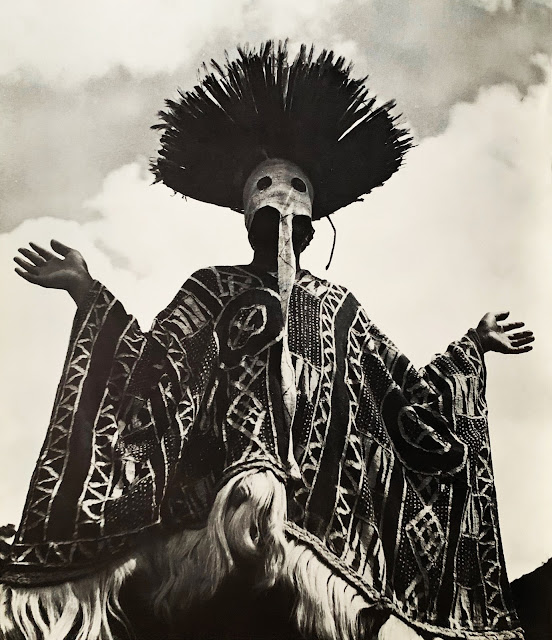
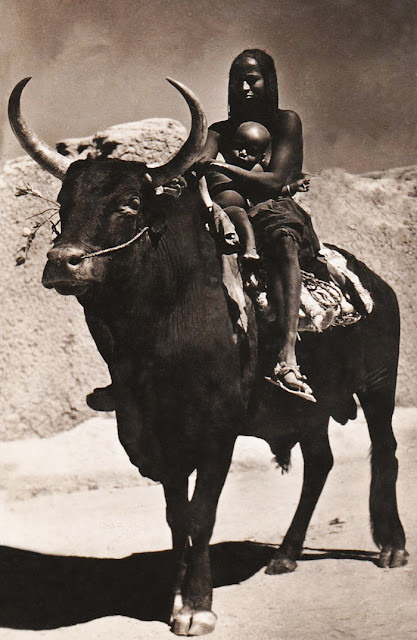
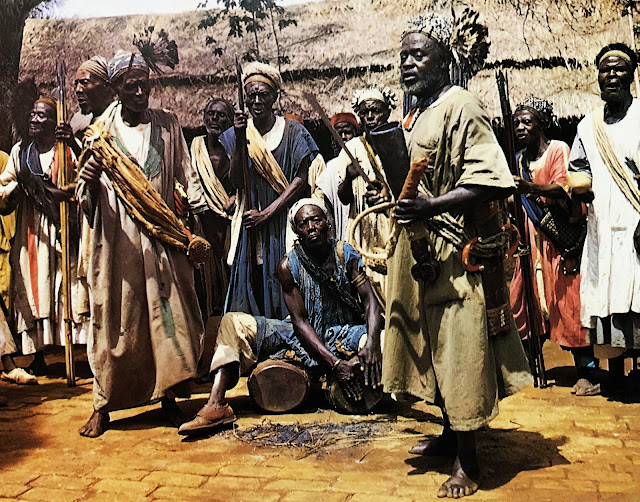
Photographs below are from The Dance, Art and Ritual of Africa by Michel Huet, Pantheon Books, 1978, and a vintage postcard:

Dance of the Bamileke elephant masks:


MusicRepublic CAMEROON – CAMEROUN Musiques du Cameroun – Ocora – OCR 25 – Bakweri / Bamilike / Bamoun / Beti


Vintage postcard of woman and child riding an ox, Northern Cameroon:


MusicRepublic CAMEROON – CAMEROUN Musiques du Cameroun – Ocora – OCR 25 – Bakweri / Bamilike / Bamoun / Beti 

Members of the Bamum Mütngu secret society in charge of applying royal decrees and ensuring customs are respected, even vis-à-vis the Bamum king:


MusicRepublic CAMEROON – CAMEROUN Musiques du Cameroun – Ocora – OCR 25 – Bakweri / Bamilike / Bamoun / Beti

Please help me purchase important traditional records to pursue my global 

curation project and share the best finds with you on this blog:


Sunday, February 27, 2022

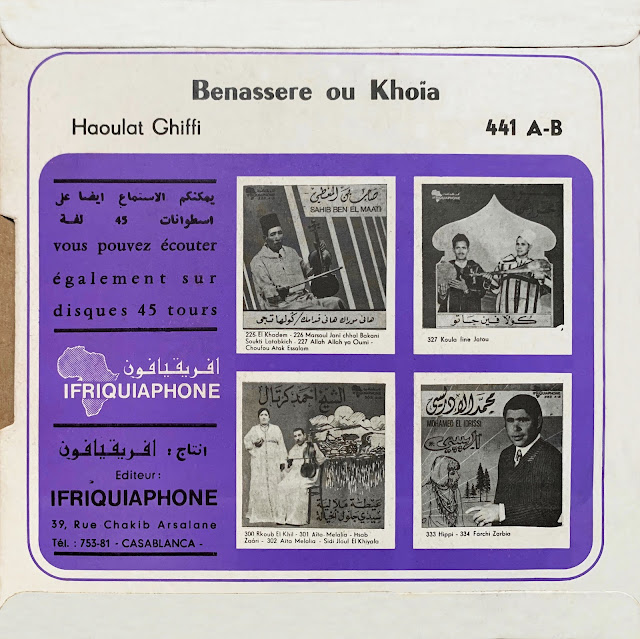
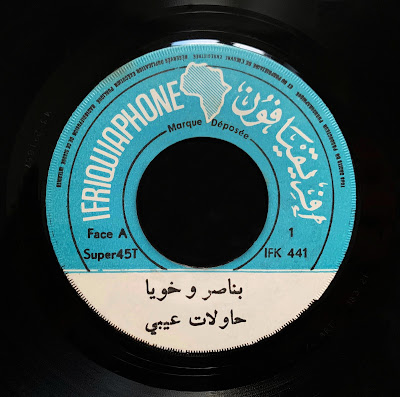
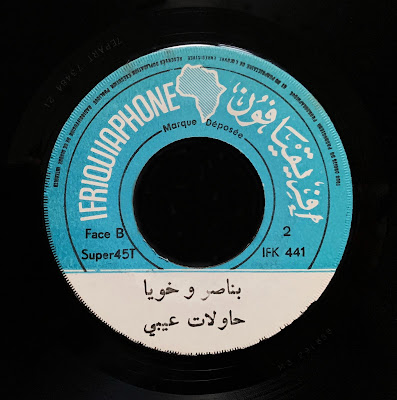
MOROCCO – MAROC Bennasser Ou Khoia / بناصر وخويا / and Cheikha Hadda Ouakki – Ifriquiaphone IFK 441

MOROCCO – MAROC

Bennasser Ou Khoia / بناصر وخويا / and Cheikha Hadda Ouakki – Ifriquiaphone IFK 441 A-B (Vinyl 7 inch, 45 RPM)

#Maroc #Morocco #Moroccan #بناصر وخويا  #traditional #folk #musique #marocaine #folklorique #traditionnelle #berbere #amazigh #Bennasser #Ou #Khouia #Bennacer #Oukhouya #Hada #Ouakki #Bennasser #Ou khouya #Oukhouya #Bennacer #Oukhouia #world #violin #bendir #louta #45 rpm #vinyl #Moyen Atlas #Middle Atlas #Berber #berbère # Ifriquiaphone #MusicRepublic

We round off our series of Moroccan 7-inch posts with this superb Bennasser Ou Khouya (b. 1939) disk on the Ifriquiaphone label. His traditional music and repertoire, in Amazigh and Arabic, was extremely popular throughout Morocco during Ou Khouia's musical career, which spanned from the mid-1960s until his retirement in 1984. 


The group’s excellence also owes much to the accomplished female singer Cheikha Hadda Ouakki (b. 1953), who joined Ou Khouya’s group in 1969. Ouakki is a famous Amazigh singer in her own right, and pursued a successful solo career that continues to this day. 


This absolutely brilliant album showcases the iconic duet’s eloquent, fluid and fiery vocals, accompanied by masterful violin – played upright like the traditional rebab – clapping, and a bendir frame drum.


Nous concluons notre série de posts de 45 tours marocains avec ce superbe disque de Bennasser Ou Khouya (b. 1939) sur le label Ifriquiaphone. Sa musique traditionnelle et son répertoire en amazigh et en arabe jouissaient d’une grande popularité dans tout le Maroc au cours de sa carrière musicale allant du milieu des années 1960 à sa retraite en 1984.


La remarquable musique d’Ou Khouya doit également beaucoup à la présence de la formidable chanteuse Cheikha Hadda Ouakki (née en 1953) qui rejoint sa formation en 1969. Cheikha Hadda Ouakki est une chanteuse amazighe de premier plan qui poursuivra une grande carrière solo.


Cet album brillant présente le chant particulièrement éloquent, fluide, et dynamique du duo emblématique, soutenu par un violon lyrique, joué verticalement comme le rebab, des battements de mains, et un tambour sur cadre bendir.


***

In collaboration with Joao and Hakim, we have to date collected a quality selection of some 200 Moroccan 7-in records on 28 different labels. Our goal is to gradually map out this vast, forgotten recorded heritage thanks mostly to Hakim in Marrakech who finds good copies of rare 45 RPMs which we then record, edit and scan. Hakim also seeks out information about the artists, labels and their catalogues. Joao plans to start recording Moroccan shellac 78 RPMs shortly. These recording are constantly being added to Hakim’s Youtube channel*, and I’ll continue to share some of our great finds with you on this blog.


En collaboration avec Joao et Hakim, nous avons à ce jour collecté une sélection qualitative d'environ 200 45 tours marocains sur 28 labels différents. Notre objectif est de cartographier progressivement ce vaste patrimoine musical enregistré difficile d’accès surtout grâce à Hakim à Marrakech qui sait où dénicher des bonnes copies de 45 tours rares que nous enregistrons, éditons et scannons. Hakim recherche également des informations sur les artistes, les labels et leurs catalogues. Joao prévoit d’enregistrer des 78 tours marocains sous peu. Ces enregistrements viendront enrichir la chaîne Youtube* d’Hakim et je partagerai quelques-unes de nos belles trouvailles sur ce blog.

*Hakim’s Youtube channel l La chaîne Youtube d’Hakim here


Download:

Our other Middle-Atlas Berber music posts:

Bennacer Ou Khouya with Cheikha Hadda Ouakki – Folklore du Moyen Atlas – Atlassiphone ATLS 1900 here

Bennasser Ou Khoia with Cheikha Hadda Ouakki - Khaldiphone KH 2046 here

Bennasser Ou Khoia with Cheikha Hadda Ouakki – Ifriquiaphone IFK 381 here

Cheikh Baïza Mohamed – Koutoubiaphone KTP 1280 here


Vintage postcard of Amazigh (Berber) women from the Middle Atlas (Moyen Atlas) mountain range, Morocco:

MusicRepublic MOROCCO – MAROC Bennasser Ou Khoia / بناصر وخويا / and Cheikha Hadda Ouakki – Ifriquiaphone IFK 441

Please help me purchase important traditional records to pursue my global 

curation project and share the best finds with you on this blog: