Thursday, October 26, 2023

NIGERIA – Sikiru Ayinde Barrister – Fuji Explosion – SKOLP 048

NIGERIA – NIGÉRIA

Sikiru Ayinde Barrister – Fuji Explosion – SKOLP 048, 1992 (LP)

#Nigeria #Yoruba #Lagos #Fuji music #Sikiru Ayinde Barrister # Balaa of Lagos #Barry Wonder #Iyalu talking drum #shekere gourd shakers #akuba drums #agogo bells #omele drums #Hawai guitar #electronic sounds #dance music #traditional music #world music #African music #musique africaine #vinyl #MusicRepublic

When I visited Lagos, on several occasions in the early 1990s, Alhaji Sikiru Ayinde Barrister's (1948-2010) Yoruba "Fuji" music — a genre both modern and steeped in tradition — was all the rage (the name was inspired by Japan’s Mount Fuji, the mountain of love and peace).

Barrister was a highly sought-after MC, conveying great prestige to lavish marriage celebrations with distinguished guests, along with crowds of the uninvited hoping to hear the music or just catch a glimpse of the "Balaa of Lagos." Barrister's singing, accompanied by frenetic drumming, created a feeling of excitement and was the absolute ultimate dance music (I had the great privilege of seeing him perform twice in the 1990s). Most regrettably, he is largely unknown outside the Yoruba community.

After posting a selection of two traditional-sounding early Barrister albums from the mid-70s and a 1985 LP with an urban edge, we now come full circle by presenting this 1992 album. These great records, spanning three decades, show how Barrister's Yoruba Islamic "Were" style of music evolved over time and became increasingly secular, reflecting the evolution of Yoruba urban society, specifically Lagos's increasingly feverish pace and intensity. But the core of his music always remained his 15- to 25-member band of outstanding percussionists playing traditional Yoruba instruments accompanied by the singer's magnificent voice and backing vocals in call-response. 


This terrific LP — featuring awesome fast-tempoed, multilayered percussion, including vibrant agogo bells, deep talking drum bass sounds, sakara drums, shekere gourd shakers, saworo tambourines, omele drums and timbales — also brilliantly incorporates fretless Juju-style “Hawaii” guitars and electronic instruments for a resolutely modern touch.

Lors de mes voyages à Lagos au début des années 1990, la musique « Fuji » inventée par Alhaji Sikiru Ayinde Barrister (1948-2010) – à la fois moderne et ancrée dans la tradition, dont le nom vient du Mont Fuji au Japon, la montagne de l'amour et de la paix ! –  faisait fureur.


Barrister était un MC très recherché, qui conférait un grand prestige aux célébrations de mariage somptueuses. Sa présence attirait de nombreux invités de marque, sans compter les foules de badauds à l’extérieur venus pour écouter la musique et peut être même apercevoir le « Balaa of Lagos ». La voix majestueuse de Barrister accompagnée de percussions frénétiques créaient une grande excitation et étaient le summum pour danser. J'ai eu le grand privilège de le voir deux fois sur scène dans les années 1990. Barrister est malheureusement un artiste peu connu en dehors de la communauté Yorouba.


Après avoir posté une sélection de deux albums traditionnels de Barrister datant du milieu des années 1970, suivi d’un album de 1985 avec une touche plus urbaine, nous bouclons un cycle avec cet album de 1992. Ces disques marquants, qui couvrent trois décennies, montrent comment la musique Islamique Yorouba « Were » de Barrister s'est progressivement modernisée au fil du temps, reflétant ainsi l’évolution des valeurs de la société Yorouba en milieu urbain, tout particulièrement dans la folle effervescence de Lagos. Mais le cœur de sa musique est toujours resté son groupe de 15 à 20 percussionnistes jouant des instruments traditionnels Yorouba ainsi que sa voix impériale et des cœurs masculins en appel-réponse.


Cet album – qui présente des percussions polyrythmiques fulgurantes, avec notamment des lancinantes cloches agogo, des tambours parlants avec de la profondeur dans les basses, des tambours sakara, des shekere, des tambourins saworo, des tambours omele et des timbales – incorpore également avec brio des guitares fretless "hawaïennes" empruntées à la musique Juju, ainsi que des instruments électroniques pour une touche résolument moderne.


Download:

Flac

MP3


My other Yoruba Fuji music shares:

Sikiru Ayinde Barrister – Vol. 6 – Africa Song AS 33-L, 1975 here

Sikiru Ayinde Barrister – Fuji Exponent Vol. 8 – AS 46-L, 1976 here

Sikiru Ayinde Barrister – Superiority – SKOLP 030, 1985 here

Kollington Ayinla – Ijoba Titun – KRLPS 6, 1984 here 

Wasiu Ayinde Barrister – Jo Fun Mi (Dance for Me) – OLPS 1361, 1990 here


Photograph below is from Art of Black Africa by Elsy Leuzinger, Littlehampton Book Services Ltd, 1972:


Head, Ife, South Western Nigeria, c. 10th-13th century:


MusicRepublic NIGERIA – NIGÉRIA Sikiru Ayinde Barrister – Fuji Explosion – SKOLP 048

Please help me purchase important traditional records to pursue my global curation project and share the best finds with you on this blog:


Wednesday, October 11, 2023

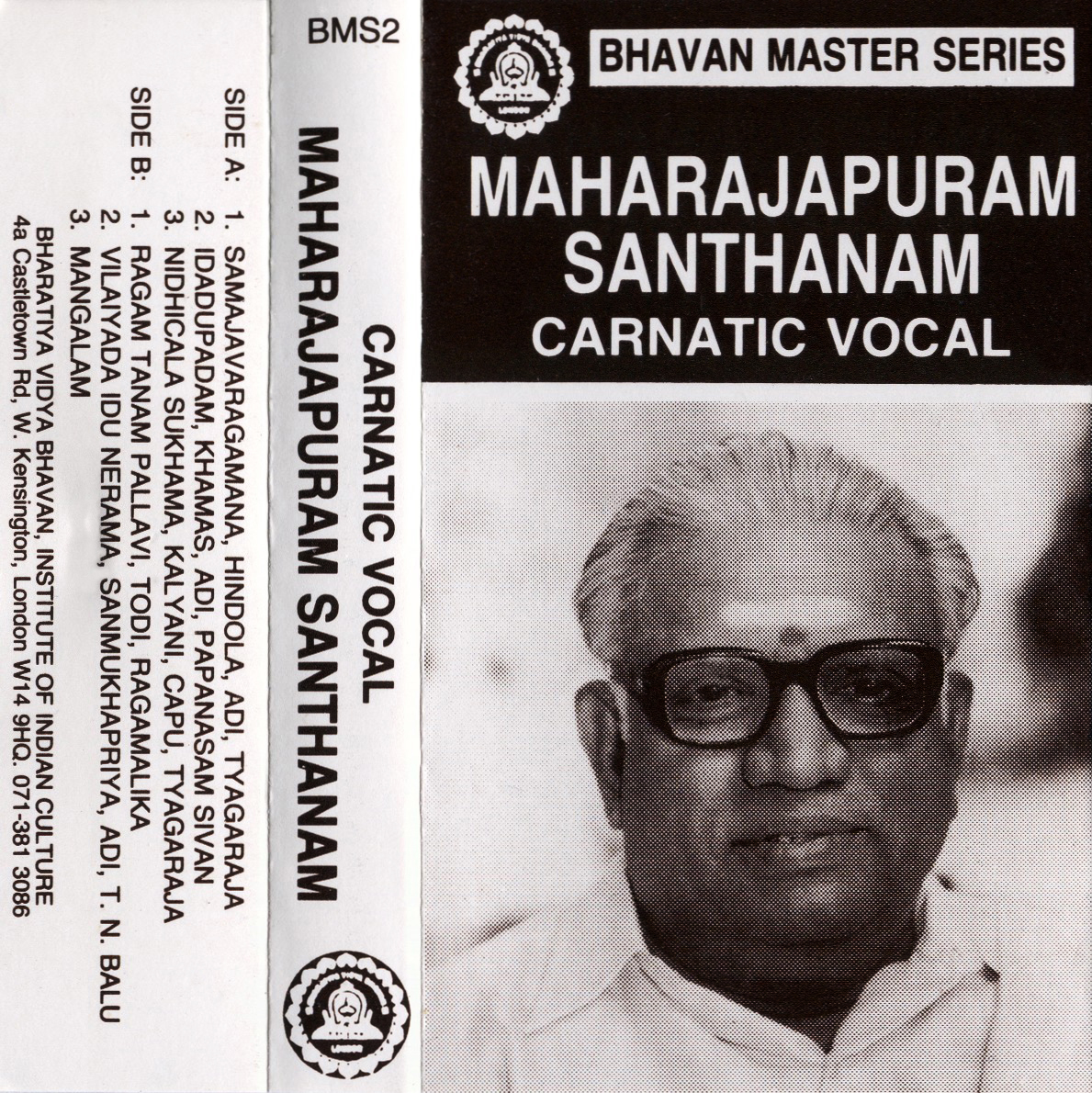
INDIA – Maharajapuram Santhanam – Carnatic Vocals – Bhavan Master Series BMS2

INDIA – INDE

Maharajapuram Santhanam – Carnatic Vocals – Bharatiya Vidya Bhavan – Bhavan Master Series BMS2, released 1990 (Cassette)

#India #Inde #Tamil Nadu #Carnatic #Maharajapuram Santhanam #Dr R Ganesh #Ramachandran #Srinivasan #Melattur Sama Dikshitar #Maharajapuram Viswanatha Iyer #V. Thyagarajan #violin #Velore G Ramabhadran #mridangam #traditional #devotional #Hinduism #MusicRepublic #cassette #tape

Maharajapuram Santhanam (1928-1992) was one of the finest Carnatic vocalists of the second half of the 20th century. Born into a family of distinguished musicians in the village of Sirunangur, Tamil Nadu, Santhanam was mentored by his father, the renowned Carnatic vocalist Maharajapuram Viswanatha Iyer (1896-1970), and perfected his art under the guidance of Melattur Sama Dikshitar. In addition to vocals, Santhanam also mastered the veena and traditional dance. With his growing popularity on the Indian music scene, thanks to his many live concerts, All India Radio broadcasts and compositions, Santhanam received many accolades and had achieved great fame by the early 1970s. He died tragically in a car accident in 1992 at the age of 64. His disciples, including Dr R Ganesh (b. 1968) and his sons Ramachandran and Srinivasan now keep his tradition alive.


This excellent cassette of live recordings showcases Santhanam’s deep, mellifluous baritone voice and impeccable vocal phrasing effortlessly expressing emotion, sensuality, creativity, devotion and lofty ideals.


He is accompanied here by his son Maharajapuram Ramachandran on backing vocals, V. Thyagarajan (b. 1927) on violin and Velore G. Ramabhadran (1929-2012) on mridangam.


Maharajapuram Santhanam (1928-1992) fut l'un des plus grands chanteurs Carnatic de la seconde moitié du XXe siècle. Né dans une famille de musiciens de renom dans le village de Sirunangur, au Tamil Nadu, Maharajapuram Santhanam fut le disciple de son père, le célèbre chanteur Carnatic Maharajapuram Viswanatha Iyer (1896-1970), et perfectionna son art sous la tutelle de Melattur Sama Dikshitar. Outre le chant, Santhanam maîtrisa également la veena et la danse traditionnelle. Au fil de ses nombreux concerts et compositions, et des diffusions de sa musique sur All India Radio, sa renommée ne fit que grandir sur la scène musicale Indienne et prit une toute autre dimension à partir du début des années 1970. En 1992, il meurt tragiquement dans un accident de voiture à l'âge de 64 ans. Ses disciples, notamment Dr. R. Ganesh (né en 1968) et ses fils Ramachandran et Srinivasan, perpétuent aujourd'hui la tradition.


Cette excellente cassette de musique live présente sa voix de baryton profonde et mélodieuse, ainsi que son phrasé vocal impeccable, qui expriment avec maestria l'émotion, la sensualité, la créativité, la dévotion et des sentiments de noble plenitude.


Il est accompagné ici par son fils Maharajapuram Ramachandran en soutien vocal, V. Thyagarajan (né en 1927) au violon et Velore G. Ramabhadran (1929-2012) au mridangam.


Download:

Flac

MP3


Many thanks to our friend D. who spontaneously offered to share some of his favorite Indian Carnatic and Hindustani cassette tapes that he had digitized, including this rare album.


Our other Carnatic vocal music posts:

M. D. Ramanathan – HMV 7 EPE 1646 here

Balamuralikrishna – HMV 7 EPE 1617 here

M. S. Subbulakshmi – Meera Bhajans – EALP 1297 here

The Great Tradition – HMV EALP 1452 that includes a track by his father Maharajapuram Viswanatha Iyer here which you can listen to below:


Photographs below are from collections of the Cleveland Museum of Art here and the National Museum, New Delhi here 


Nataraja, Shiva as the Lord of Dance, Tamil Nadu, 113 x 102 x 30 cm, Chola period c.1000:


“One of the most celebrated sculptural forms in the history of Indian art, this elegant and dynamic figure embodies some of Hinduism’s most fundamental tenets. According to Hindu thought, time is cyclical; the world is created, maintained, preserved for a time, then destroyed, only to be created again an infinite number of times. For those Hindus who view Shiva to be the all-powerful creator divinity, he is responsible for both creation and destruction. The ring of fire and the tongue of flame he holds in his left hand refer to destruction, and the drum in his raised right hand refers to the relentless beat of time as it moves inevitably forward. His lower right hand, held up with the palm facing out, signals to his devotees not to be afraid of the impending destruction; they can be liberated from the cycles of birth and death through devotion to him, which he indicates by pointing to his upraised foot. With every step in his dance, he lands on a dwarfish figure personifying ignorance.”


MusicRepublic – INDIA – INDE – Maharajapuram Santhanam – Carnatic Vocals – Bhavan Master Series BMS2


Manikkavachakar, Tamil Nadu, Late Chola period, 12th century;


The 9th century Tamil poet-saint, devoted his life to Lord Shiva and composed a collection of popular Tamil devotional hymns about his visions of the deity.


MusicRepublic – INDIA – INDE – Maharajapuram Santhanam – Carnatic Vocals – Bhavan Master Series BMS2


Please help me purchase important traditional records 

to pursue my global curation project and 

share the best finds with you on this blog:


Monday, October 2, 2023

ROMANIA – Mihály Halmágyi – Gyimesi Népzene (Hungarian Folk Music from Gyimes) – Hungaroton – SLPX 18145

ROMANIA – ROUMANIE

Mihály Halmágyi with Gizella Ádám – Gyimesi Népzene (Hungarian Folk Music from Gyimes) – Hungaroton – SLPX 18145, 1988 (LP)

#Romania #Roumanie #Hungary #Hongrie # Magyarország #Mihály Halmágyi #Gizella Ádám #gardon #violon #dance #music #danse #musique #folk #Csángó #Gyimes #traditional #world #village music #vinyl #MusicRepublic
 

I am delighted to present a remarkable LP of Hungarian folk music performed by Mihály Halmágyi on violin and his wife Gizella Ádám on the ancient percussive four-string gardon cello where strings are plucked and beaten using a stick. She also sings on A5.


The couple hails from Gyimes (or Ghimeș), a village located in Bacău County in the Western Moldavia region in Eastern Romania, home to the Csángós, a Hungarian minority group in Romania, who have preserved their language and rich, time-honored traditional culture, which includes music, dance and handicrafts for which they are renowned.


Halmágyi's and Ádám's brilliant, precise, and dynamic playing weaves spirited and raw dance tunes with complex, sophisticated lyrical musings that at times delve into introspection and abstraction. Their artistry is a true testament to the vitality of Csángó folklore of old.


J'ai le plaisir de vous présenter ce remarquable disque de musique folklorique hongroise interprété par Mihály Halmágyi au violon et sa femme Gizella Ádám au violoncelle percussif gardon, dont les quatre cordes sont pincées et frappées à l'aide d'un bâton. Elle chante également sur A5.


Le couple est originaire de Gyimes (ou Ghimeș), un village situé dans le département de Bacău, dans la région de Moldavie occidentale, dans l'est de la Roumanie, où vivent les Csángós, une minorité hongroise de Roumanie, qui a su préserver sa langue et sa riche culture ancestrale, qui comprend la musique, la danse et l'artisanat qui font leur renommée.


Le jeu brillant, précis et dynamique de Mihály Halmágyi et de Gizella Ádám tisse des airs de danse bruts et pleins d’entrain, avec des envolées lyriques complexes et sophistiquées qui touchent par moments à l'introspection et à l’abstraction. Leur art est un véritable témoignage de la vitalité du folklore Csángó d’antant.


A1 – Lassú És Sebes Magyaros (Kezdő) / Slow and Swift Hungarian Dances (Opening) 


A2 – Sebes Csárdás / Swift Csárdás 


A3 – Lassú És Sebes Magyaros (Hajnali) / Slow and Swift Hungarian Dances (Morning)


A4 – Kettős Jártatója És Sirülője (Sürüleje) / Walking and Fast Couple Dances 


A5 – Egyszer Egy Kicsi Madár (Keserves) / Once a Little Bird (Lament) 


A6 – Kerekes / Round Dance 


B1 Lakodalmas Dallamok / Wedding Songs:

B1a – Rákóczi Mars (Csángó Rákóczi) / Rákóczi March 

B1b – Csárdás 

B1c – Lassú Magyaros És Sebes Csárdás / Slow Hungarian Dance & Swift Csárdás 

B1d – Lakodalmi Mars / Wedding March 

B1e – Amikor Mennek a Tyúk Után (Elment A Tyúk) / When the Hen is Followed (The Hen Went Wandering) 

B1f – Héjsza / The Chase 


B2 – Elvesztette a Pásztor a Juhait  / The Shepherd Lost His Sheep 


B3 Gyászszertartás Dallamai / Funeral Rite Songs: 

B3a – Halott Mellett Való Keserves / Lament at the Bedside of the Deceased 

B3b – Táncnóta (Lassú Magyaros) / Dance Tune (Slow Hungarian Dance) 

B3c – Halottkisérő / Funeral Ceremony Tune 


Download:

Many thanks to Joāo for sharing his collection of Hungarian music, including this gem!

Please help me purchase important traditional records 

to pursue my global curation project and 

share the best finds with you on this blog:


Sunday, September 17, 2023

TUNISIA – Hedi Habbouba / الهادي حبوبة – Maison du Disque Oriental – MDO 5

TUNISIA – TUNISIE

Hedi Habbouba / الهادي حبوبة – Maison du Disque Oriental – MDO 5, 1977 (LP)

#Tunisie #Tunisia #Hedi Habbouba #Mezoued #mizwad  # mizwid #cornemuse #bagpipe # Darbouka #drum #bendir #Beduin music #musique bedouine #chant #singing #dance #danse #marriages #celebrations #fêtes #musique populaire #vinyl #LP #traditional music #world music #Arabic music #musique arabe #Maison du Disque Oriental #MusicRepublic


Hedi Habbouba (b. 1949), born in Tunis, is a prominent Tunisian mezoued (mizwad or mizwid) singer and composer. Mezoued refers both to the Tunisian bagpipe of Bedouin origin and to a popular musical genre – also found in Algeria and Libya – played at weddings and other festive occasions.


Despite its great popularity throughout the country, mezoued and the music of Hedi Habbouba were long banned from broadcasting on state radio and television, as Tunisian cultural authorities preferred to broadcast and promote classical Arabic music to the detriment of this popular music sung in dialect and accompanied by mezoued bagpipes. 


Since the 1990s, mezoued has been rehabilitated in the media and has generated a growing interest among renowned artists, composers, and cultural figures, such as Samir Agrebi, who sought to make mezoued an integral part of Tunisia's musical heritage.


After honing his skills as a percussionist for Zina and Aziza, the great icons of Bedouin dance, Habbouba began a professional career in the mid-70s, collaborating with many composers and lyricists. The pioneer who modernized mezoued also composed more than 300 of his own songs.


Released in 1977, this superb album bursting with vitality showcases Habbouba's commanding, mellifluous voice with backing vocals, a powerful, quirky mezoued bagpipe (replaced by an ud lute on track A2), and dynamic darbuka drums and percussion. The fiery, spellbinding track B1 is particularly impressive.


Hédi Habbouba (né en 1949), né à Tunis, est un chanteur et un compositeur de mezoued (mizwad ou mizwid) tunisien de premier plan. Le mezoued est à la fois la cornemuse tunisienne d'origine bédouine et un genre musical populaire – également présent en Algérie et en Libye – joué lors des mariages et autres occasions festives.


Malgré sa grande popularité en Tunisie, le mezoued et la musique d'Hedi Habbouba furent longtemps interdits d’antenne sur les radios et télévisions d’état, les instances culturelles tunisiennes privilegiant la diffusion et la promotion de la musique classique arabo-andalouse au detriment de cette musique populaire chantée en dialecte et accompagnée par la cornemuse mezoued. 


A partir des années 1990, on assiste à une réhabilitation progressive du mezoued dans les medias et à un intérêt grandissant auprès d’artistes, de  compositeurs et de personnalités culturelles de renom, tel Samir Agrebi, souhaitant vivement inscrire le mezoued dans le patrimoine musical tunisien.


Après une expérience de percussionniste aux côtés de Zina et Aziza, les grandes icônes de la danse bédouine, Hedi Habbouba entame une grande carrière solo dans la musique au milieu des années 70 en collaboration avec de nombreux compositeurs et paroliers. Ce pionnier qui modernisa le mezoued a également composé plus de 300 de ses propres chansons.


Sorti en 1977, ce superbe album débordant de vitalité met en avant la voix imposante et mélodieuse d’Habbouba accompagné par des chœurs masculins, une cornemuse mezoued puissante et intense (remplacée par un luth oud sur la piste A2), et un tambour darbouka et des percussions dynamiques. Le morceau B1, fougueux et envoûtant, est particulièrement impressionnant.


A1 – جنة وطرافك نار / Janna Ouatrafek Nar


A2 – هيا وهيا / Haya Ou Haya* 


A3 – ناري على الزينة / Nari Ala Ezzina


B1 – عند غزالي / And Eghzali*


B2 – سودة عينيه / Souda Ainih*


B3 – يا لميمة / Ya Lommima**

*written by Mansour Majdoub (b. 1930), lyrics by Ridha Khouini (1940-2015).

**written by Abdelhamid Sassi, lyrics by Ridha Khouini. 


Download:

Our other Tunisian music posts:
Tunisia – A Musical Anthology of the Orient – BM 30 L 2008 here
Music of the Arabian Orient and North Africa – Supraphon Disc 4 here


Vintage postcard of a traditional Tunisian "handkerchief" dance with a mezoued bagpipe, a darburka drum, a bendir and hand-clapping:


MusicRepublic – TUNISIA – TUNISIE Hedi Habbouba / الهادي حبوبة – Maison du Disque Oriental – MDO 5

Please help me purchase important traditional records 

to pursue my global curation project and 

share the best finds with you on this blog:


Saturday, August 26, 2023

ALGERIA – LIBYA – Musique Classique Arabe - 1er Festival Algérien de la Musique Andalouse 1967 / Disque 1 Mehradjane

ALGERIA – LIBYA 
Musique Classique Arabe – 1er Festival Algérien de la Musique Andalouse 1967 / Disc 1 – Mehradjane (LP)

#Algeria #Algérie #Libya #Libye #Alger #Algiers #Nouba #Arab-Andalusian classical music #musique arabo-andalouse #Aroubi #Hawzi #Bilda #mandole #violon #orchestre #Mohamed Khaznadji #traditional music #world music #Algerian #Algérienne # Mehradjane #vinyl #MusicRepublic # L'Orchestre de Libye # Hassen El Aribi # Abdelmoumène Bentobal # Mohamed El Ghomeiri #Abderrezak Fekhardji #Arabic music #musique arabe

After gaining independence in 1962, the Algerian government wanted to highlight Algeria’s and the Maghreb’s time-honored Arab-Andalusian musical heritage by organizing the first Festival of Arab-Andalusian music at Algiers’ Théâtre National in 1967. 


This superb album of live recordings made during the festival (the first volume in a six-LP box set on the Mehradjane label) presents an enticing program of Algerian Nuba – also called Arab-Andalusian classical music – performed by ensembles from the country’s three major Nuba stylistic centers, the cities of Constantine (A1) Algiers (B1-B2) and Tlemcen (B3), plus a rare recording of Nuba performed by a Libyan orchestra (A2). Two more editions of the Festival of Arab-Andalusian music were held in Algiers in 1969 and 1972, with the subsequent release of two additional 10-LP and 12-LP box sets. Here, four orchestras – with lead singers, choruses and instruments including violins, flutes, rebab bowed lutes, ud lutes, quanun zithers, darbuka drums and bendir frame drums – weave poetic, contemplative and spirited ambiances.


The sophisticated civilization that arose in Spain while under Muslim rule embraced and advanced many domains, from science, religion and metaphysics to poetry, music, architecture and the arts, at a time when cities like Cordoba, Seville and Granada were home to Moorish, Arabic, Hispanic, Christian and Jewish cultures in a spirit of openness and tolerance.


Following the Reconquest of the Iberian Peninsula in the 15th century, this musical heritage of a golden age migrated to North Africa, where it continued to thrive and in time became an intrinsic part of the Maghreb’s identity.


Après l’indépendance de l’Algérie en 1962, le gouvernement algérien chercha à mettre en valeur le patrimoine musical arabo-andalou d’Algérie et du Maghreb en organisant un Festival de musique arabo-andalouse en 1967 au Théâtre National d’Alger.


Ce superbe album de concerts enregistrés pendant le festival (le 1er volume d'un coffret de six disques publiés sur le label Mehradjane) propose un séduisant programme de Nouba algérienne – également appelée musique classique arabo-andalouse – interprétée par des orchestres issus des trois grands centres stylistiques de la Nouba en Algérie, à savoir de Constantine (A1), d’Alger (B1-B2) et de Tlemcen (B3), ainsi qu’un enregistrement rare de Nouba interprétée par un orchestre libyen (A2). Deux nouvelles éditions du Festival de musique arabo-andalouse seront également organisées à Alger en 1969 et 1972 suivi de la sortie de deux coffrets de disques supplémentaires. Ici, les quatre orchestres – comprenant des chanteurs, des chœurs et des instruments notamment des violons, des flûtes, des luths à archet rebab, des luths oud, des cithares quanun, des tambours darbuka et des tambours sur cadre bendir – tissent des ambiances poétiques, contemplatives et dynamiques. 


La civilisation sophistiquée née pendant la domination musulmane de Espagne excellait dans de nombreux domaines, allant des sciences à la religion, la métaphysique, la poésie, la musique, l'architecture et les arts, à une époque où des villes comme Cordoue, Séville et Grenade accueillaient et s’enrichissaient des cultures maure, arabe, hispanique, chrétienne et juive dans un esprit d'ouverture et de tolérance.


Suite à la reconquête de la péninsule ibérique au XVe siècle, ce patrimoine musical issu d'un âge d'or migre alors vers l'Afrique du Nord où il continue de prospérer et devient même peu à peu une partie intégrante de l'identité maghrébine.


A1 – Excerpt of a Nuba in Rasd Mode – Istikhbar Moual / Dharani El Haoua / Dharani El Haoua;

L'Orchestre de Constantine Directed by Abdelkader Toumi (1906-2005) / Vocals by Abdelmoumène Bentobal (1928-2004);

ALGERIA


A2 – Excerpts of a Nuba Malouf – Men Iaachaq El Ghozlane;

L'Orchestre de Libye Directed by Hassen El Aribi;

LIBYA


B1 – Excerpts of Neklab Sika – Ana Elladi Bia;

L'Orchestre de la Société des Concerts du Conservatoire d'Alger Directed by Abderrezak Fekhardji (1911-1984) / Vocals by Mohamed Khaznadji (b. 1929);

ALGERIA


B2 – Excerpts of Nesraf Dil – Aii Sabab;

L'Orchestre de la Société des Concerts du Conservatoire d'Alger Directed by Abderrezak Fekhardji / Vocals by Mohamed Khaznadji;

ALGERIA


B3 – Excerpt of a Nuba in Sika Mode – Soltane Errabi & Ama Teftaker Îa Ghazali;

L'Orchestre de Tlemcen / Vocals by Mohamed El Ghomeiri;

ALGERIA


Download:


Our other Algerian Nuba posts:

Mohamed Tahar Fergani – El Khaima & Ya Mesiene Anabi – Sawt El Menyar 1004 here

Mohamed Khaznadji Musique Classique Algérienne – Noubat Ed Dhil – Les Artistes Arabes Associés 72830 here


Dahmane Ben Achour – Noubat Edd'il & Noubat Elhsine – Les Artistes Arabes Associés 72503 here


Photographs below are from La Musique Classique du Maghreb by Mahmoud Guettat, La Bibliothèque Arabe, Sindbad, 1980:

The Algerian kwitra lute, with eight strings grouped in four courses, is closely connected to the Arab-Andalusian musical heritage:

MusicRepublic  – ALGERIA – LIBYA   – Musique Classique Arabe - 1er Festival Algérien de la Musique Andalouse 1967 / Disque 1 Mehradjane


Bendir player, Libya:

MusicRepublic  – ALGERIA – LIBYA   – Musique Classique Arabe - 1er Festival Algérien de la Musique Andalouse 1967 / Disque 1 Mehradjane

Please help me purchase important traditional records 

to pursue my global curation project and 

share the best finds with you on this blog: